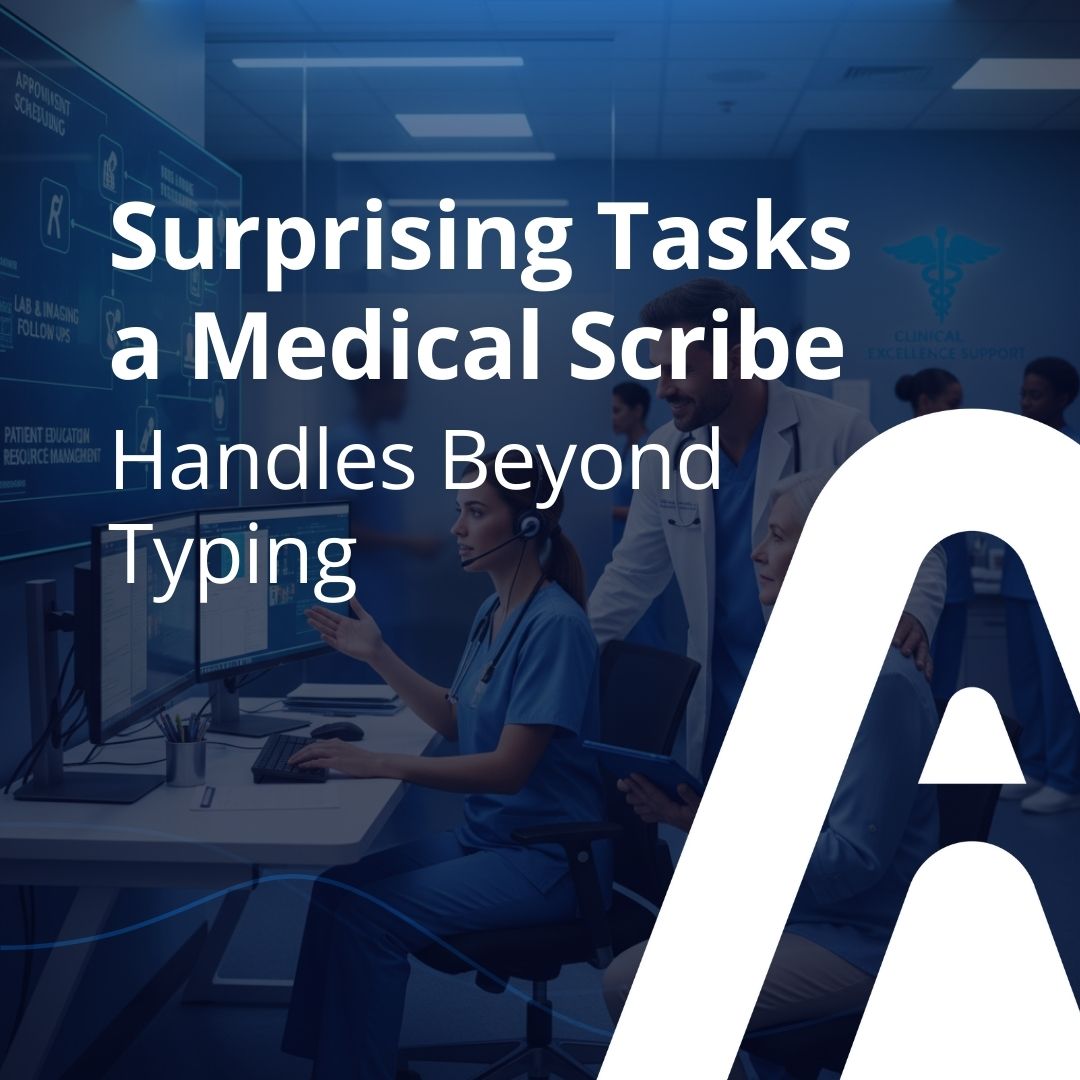
Often seen as simply someone who types what the doctor says during consultations, a medical scribe actually contributes much more to the clinical workflow than just note-taking. They improve healthcare team efficiency and support better patient care by handling a variety of behind-the-scenes tasks.
By relieving clinicians of many administrative duties, they enable doctors to focus more on patients instead of paperwork. Understanding their full role reveals just how essential they are in modern healthcare. Let’s explore the surprising and valuable tasks they handle beyond transcription.
.webp)
What more does a medical scribe do besides transcription?
Beyond transcribing conversations, these professionals carefully and efficiently organise and manage clinical data to keep patient records accurate and complete. They track test results and ensure that important information is promptly updated in the system. Many review documentation for errors or missing details and collaborate with clinicians to clarify ambiguities. They also help prepare referral letters and follow-up instructions, which ensure continuity of care. These additional responsibilities mean they act as active participants in maintaining comprehensive, up-to-date patient files that support better diagnosis and treatment.
How is communication improved within healthcare teams?
These professionals play a vital role in enhancing communication among healthcare staff by keeping detailed and consistent records easily accessible to the entire care team. They act as a crucial bridge between doctors, nurses, specialists, and administrative staff by making sure patient information is shared accurately and promptly. This transparency helps prevent costly miscommunications and reduces delays in treatment. Because they capture real-time updates and document patient histories clearly, every team member can stay informed about the patient’s condition and care plan, supporting smoother collaboration and improved outcomes.
How is clinical decision-making supported?
These professionals assist clinicians by flagging missing or inconsistent information in patient records, helping to ensure documentation accuracy. They sometimes summarise patient histories or highlight key details that clinicians need for informed decision-making. By maintaining thorough and organised records, they help clinicians quickly access relevant data, reducing the risk of errors or overlooked information. This proactive support in clinical documentation means they indirectly contribute to safer and more efficient patient care, enabling healthcare providers to make well-informed decisions based on clear, reliable information.
In what ways do medical scribes reduce administrative burden for clinicians?
These professionals handle a variety of administrative tasks that free clinicians from paperwork, allowing them to spend more time focusing on patient care. They manage the flow of documentation, ensuring notes are completed and filed promptly. They assist in scheduling follow-up appointments, preparing referral letters, and coordinating the completion of forms required for insurance or hospital admissions. By managing these duties, they help reduce clinician burnout and improve overall workflow efficiency. Their support allows doctors to maintain a better work-life balance while improving the quality and timeliness of clinical documentation.
Have a question?