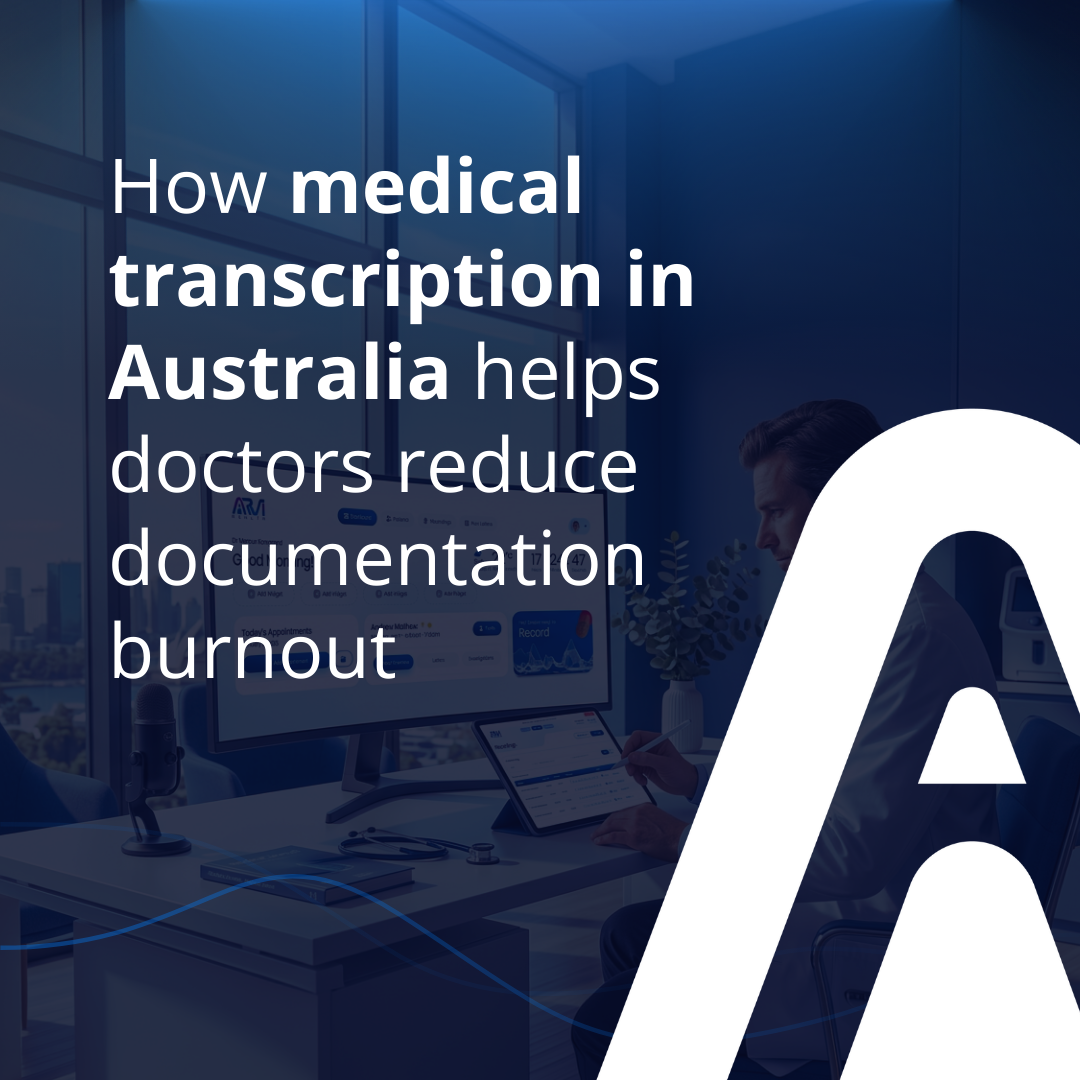
Clinical documentation has become a primary driver of practitioner exhaustion and administrative strain. Professional medical transcription in Australia provides a vital lifeline for doctors, ensuring that patient encounters are recorded with precision while removing the heavy manual burden that often leads to significant fatigue and reduced workplace satisfaction.
Without streamlined transcription support, clinicians frequently face:
By integrating advanced AI with expert oversight, medical practices can effectively eliminate the "documentation debt" that contributes to burnout. This modern approach ensures that every record is accurate and compliant, allowing doctors to prioritise high-quality patient care over repetitive data entry.
.webp)
Enhancing the patient-doctor connection
Removing the digital barrier of a computer screen allows for more meaningful patient-doctor interactions during sensitive consultations. When medical transcription in Australia handles the note-taking, clinicians can maintain eye contact and practice presence-based care without distraction. This shift improves patient satisfaction and clinical outcomes by ensuring the doctor’s full attention remains on the person, not the keyboard. Furthermore, it fosters deeper trust, encourages more open patient communication, and ensures that subtle clinical cues are never missed during a busy day.
Standardising documentation across diverse specialties
Tailoring the documentation outputs to meet the specific needs of Australian medical sub-specialties ensures high-level clinical consistency and clarity. Whether in oncology, orthopaedics, or general practice, medical transcription provides structured notes that reflect specialised terminology. By ensuring that every report follows a standardised format, healthcare teams can then reduce cognitive load and improve long-term longitudinal patient tracking. This will also make it relatively easier to track patient histories over time while aligning documentation with Australian clinical guidelines.
Mitigating the risk of diagnostic coding errors
Accurate documentation is essential for correct Medicare (MBS) billing and compliance within the Australian healthcare system. When medical transcription captures every clinical detail in real-time, it significantly reduces the cognitive load of memorising complex diagnostic codes during a busy shift. This precision ensures that every billable service is recorded without the need for manual data entry or retrospective guesswork. Furthermore, it provides a robust clinical path for audits, improves revenue integrity, and ensures that practices are correctly reimbursed for the care they provide.
Improving work-life integration for practitioners
Completing documentation within the consultation hour effectively ends the workday when the clinic doors close. By utilising medical transcription, clinicians can eliminate the "administrative debt" that typically accumulates and spills into their personal time or weekends. Removing this persistent burden supports a more sustainable career path for both early-career doctors and experienced veterans alike. Additionally, this streamlined workflow reduces daily stress, prevents long-term professional burnout, and allows practitioners to return home with a clear mind and a finished to-do list.
Have a question?